
Introduction
Road construction and maintenance projects require accurate, efficient, and reliable cutting equipment. Whether contractors are installing underground utilities, repairing damaged pavement, creating expansion joints, or removing sections of concrete roads, choosing the right cutting machine is essential for achieving professional results.
A concrete cutter for road construction is a specialized machine designed to cut concrete pavement, asphalt surfaces, and other hard construction materials with precision. Compared with ordinary handheld cutting tools, professional road cutting machines offer greater cutting depth, improved stability, and higher working efficiency.
However, not every concrete cutter is suitable for every road construction project. Different machines have different power sources, cutting capacities, blade sizes, operating methods, and applications. Selecting an unsuitable machine may result in slow cutting speeds, excessive blade wear, inaccurate cutting lines, and unnecessary maintenance costs.
So, how do you choose the right concrete cutter for road construction?
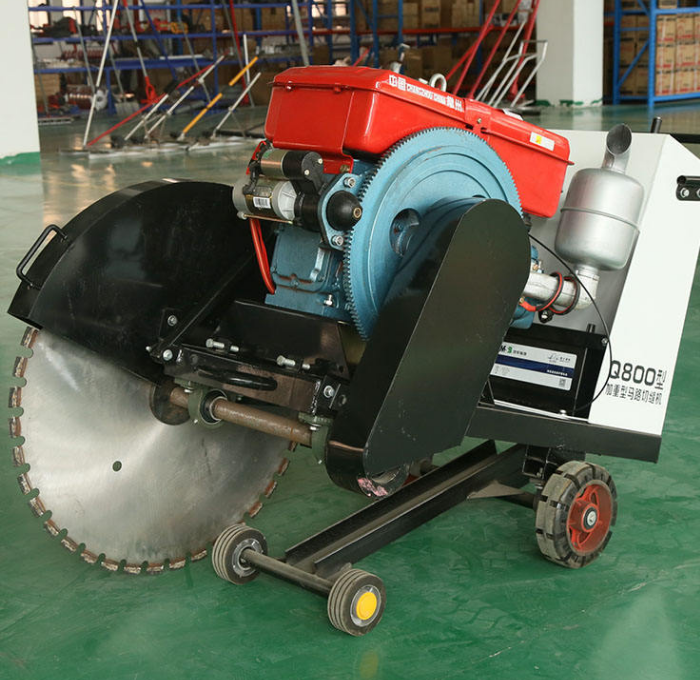
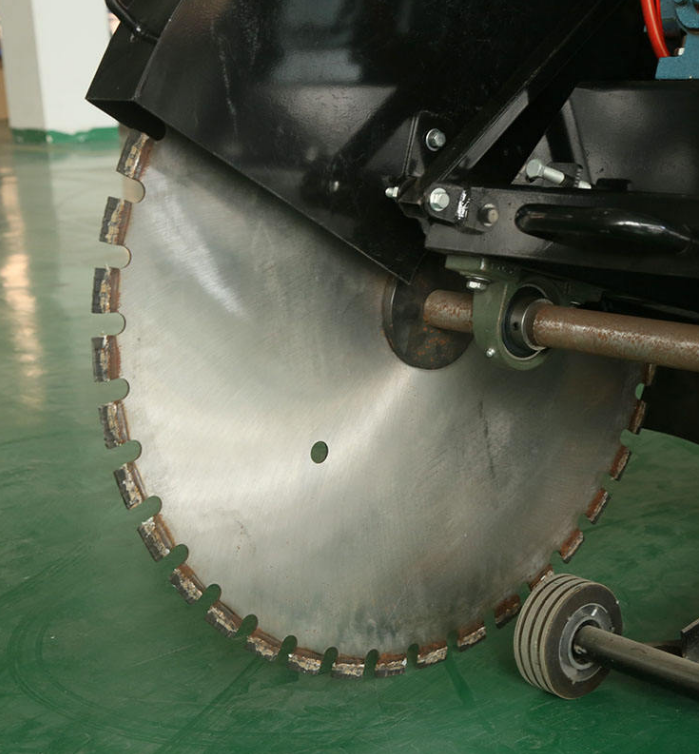
What Is a Concrete Cutter for Road Construction?
A concrete cutter for road construction is a machine used to create straight, controlled cuts in concrete pavement, asphalt roads, and other hard surfaces. It typically uses a high-speed diamond saw blade to cut through construction materials.
These machines are widely used in road construction, highway maintenance, municipal engineering, parking lot renovation, bridge construction, and underground pipeline installation.
Main Components of a Road Concrete Cutter
Although different models have different structures, most concrete cutters include the following components:
| Component | Main Function |
|---|---|
| Engine or electric motor | Provides power for cutting operations |
| Diamond saw blade | Cuts concrete, asphalt, or other hard materials |
| Blade guard | Protects the operator from debris and contact with the blade |
| Cutting depth adjustment | Controls the required cutting depth |
| Water supply system | Reduces dust and helps cool the blade |
| Guide handle | Helps operators control the cutting direction |
| Frame and wheels | Support the machine and improve movement |
| Control system | Controls machine operation and adjustment |
The performance of a concrete cutter for road construction depends on how these components work together. A powerful motor alone does not guarantee excellent cutting performance. Blade compatibility, machine weight, frame stability, and cutting depth are also important.
Common Road Cutting Applications
A professional concrete cutter can be used for:
- Cutting concrete road expansion joints.
- Repairing cracked or damaged pavement.
- Creating straight cutting lines before pavement removal.
- Cutting asphalt roads during utility installation.
- Opening trenches for underground water pipes and cables.
- Separating concrete sections during road reconstruction.
- Cutting concrete floors in industrial and commercial areas.
For contractors working on different types of projects, selecting a versatile concrete cutter for road construction can improve equipment utilization and reduce the need for multiple machines.
Understand the Different Types of Concrete Cutters
Before purchasing a concrete cutter for road construction, you should understand the differences between the available machine types.
Each machine is designed for specific working conditions. The right choice depends on the cutting material, required depth, project size, and available power source.
Walk-Behind Concrete Cutter
A walk-behind concrete cutter is one of the most common machines used in road construction and pavement maintenance.
The operator controls the machine by walking behind it and guiding the cutting direction. Its wheeled frame provides stability, while the blade cuts through concrete or asphalt surfaces.
Main advantages:
- Suitable for straight cutting operations.
- Provides stable cutting performance.
- Available with different engine and motor configurations.
- Suitable for road repair and pavement joint cutting.
- Offers practical operation and convenient transportation.
Walk-behind concrete cutters are commonly used for municipal road maintenance, parking lot construction, concrete pavement cutting, and small to medium-sized infrastructure projects.
When selecting this type of concrete cutter for road construction, pay attention to blade diameter, maximum cutting depth, engine power, machine weight, and water supply design.
Self-Propelled Road Concrete Cutter
A self-propelled road cutter is designed to reduce operator effort during extended cutting operations.
Unlike manually pushed machines, self-propelled models use a drive system to move the machine forward. Some models also feature dual-blade configurations or specialized cutting systems.
Main advantages:
- Reduces manual pushing effort.
- Suitable for longer cutting distances.
- Provides consistent movement during operation.
- Can improve working efficiency on large projects.
- Suitable for professional road construction contractors.
A self-propelled concrete cutter for road construction is particularly useful for highway maintenance, large pavement projects, and continuous cutting operations.
Before choosing a self-propelled model, confirm its travel speed, cutting capacity, drive system, steering performance, and compatibility with the intended working surface.
Handheld Concrete Cutter
A handheld concrete cutter is compact and portable. It is commonly used for smaller cutting tasks or areas where large road cutting machines cannot easily operate.
Main advantages:
- Compact structure.
- Easy to transport.
- Suitable for localized cutting work.
- Convenient for cutting corners and narrow areas.
- Available in electric, gasoline, and battery-powered configurations.
However, handheld machines generally have more limited cutting depth and may require greater operator control.
They are better suited to small repair jobs, edge cutting, and supplementary cutting work rather than long, continuous road cutting operations.
Wall and Floor Concrete Cutting Machines
Wall saws and specialized floor cutting machines are designed for different cutting directions and working environments.
Wall saws are used for vertical or inclined concrete structures, while floor cutting machines are designed for horizontal surfaces.
These machines may be required for:
- Concrete wall openings.
- Structural modification.
- Bridge and building renovation.
- Industrial floor cutting.
- Specialized infrastructure projects.
A buyer should not assume that every concrete cutter for road construction can also handle wall cutting. Machine structure, blade mounting, and cutting direction must match the application.
Comparison of Different Concrete Cutter Types
| Machine Type | Main Application | Mobility | Suitable Project Size |
|---|---|---|---|
| Walk-behind cutter | Road and pavement cutting | Manual push | Small to large |
| Self-propelled cutter | Continuous road cutting | Powered movement | Medium to large |
| Handheld cutter | Localized cutting | Portable | Small |
| Wall saw | Vertical concrete cutting | Rail or fixed support | Specialized |
| Floor cutting machine | Horizontal concrete cutting | Model-dependent | Small to large |
Key Factors to Consider When Choosing a Concrete Cutter for Road Construction
Choosing a concrete cutter involves more than comparing motor power or blade diameter. You need to evaluate the actual working requirements and match them with the machine’s technical specifications.
Cutting Depth
Cutting depth is one of the most important factors when selecting a concrete cutter for road construction.
Different projects require different cutting depths. For example, shallow joint cutting does not require the same machine capacity as cutting thick concrete pavement.
Before purchasing, determine:
- The thickness of the concrete or asphalt surface.
- The required cutting depth.
- Whether multiple cutting passes are acceptable.
- The blade diameter supported by the machine.
- The machine’s actual maximum cutting depth.
Remember that the maximum cutting depth is usually less than the blade radius because part of the blade is covered by the machine guard and cutting structure.
A larger blade may provide greater cutting depth, but it also requires a compatible machine with sufficient power and structural support.
Engine or Motor Power
Power directly affects the machine’s ability to maintain cutting performance under load.
A concrete cutter for road construction may use gasoline engines, diesel engines, or electric motors, depending on the machine design.
| Power Source | Main Advantages | Typical Applications |
|---|---|---|
| Gasoline engine | Independent operation and convenient mobility | Outdoor road construction |
| Diesel engine | Suitable for heavy-duty equipment designs | Large construction projects |
| Electric motor | Stable power supply and no exhaust emissions at the point of use | Indoor or accessible outdoor areas |
| Battery power | Portable operation without a direct power cable | Small or specialized cutting tasks |
When comparing motor specifications, check rated power, operating voltage, frequency, starting method, and continuous operating capability.
Do not select a machine based only on its advertised maximum power. The power source must match the blade size, cutting material, and expected workload.
Diamond Saw Blade Compatibility
The saw blade is the component that directly contacts the material being cut.
A high-quality diamond blade can improve cutting efficiency, reduce unnecessary wear, and provide a cleaner cutting edge.
However, the blade must be compatible with the machine.
Important blade specifications include:
- Blade diameter.
- Arbor hole diameter.
- Segment design.
- Diamond concentration and bond.
- Maximum operating speed.
- Cutting material compatibility.
Concrete and asphalt do not always require the same blade specification. The blade bond and segment design should be selected according to the material hardness and abrasiveness.
For example, an asphalt cutting blade is generally designed differently from a blade intended for reinforced concrete.
Always confirm that the blade’s maximum permitted RPM is compatible with the machine’s operating speed.
Machine Weight and Stability
Machine weight affects transportation, handling, and cutting stability.
A heavier concrete cutter for road construction may provide better stability during cutting, particularly when working with large blades. However, excessive weight can make transportation and movement more difficult.
A lighter machine is easier to transport and maneuver, but it must still provide sufficient frame rigidity and stability.
Consider the following factors:
- Total machine weight.
- Wheel size and material.
- Frame strength.
- Handle design.
- Vibration control.
- Transportation requirements.
For contractors who frequently move between job sites, a machine with practical lifting points and a compact transport structure may be especially useful.
Water Cooling and Dust Control
Cutting concrete and asphalt produces heat and dust. A water supply system is commonly used with wet-cutting diamond blades.
Water helps cool the blade, reduces airborne dust, and can improve cutting conditions.
When evaluating a concrete cutter for road construction, check:
- Water tank capacity, if equipped.
- Water hose arrangement.
- Water distribution around the blade.
- Compatibility with external water supplies.
- Ease of cleaning the water system.
Wet cutting can significantly reduce dust exposure, but it does not eliminate all hazards. Operators should still use appropriate respiratory protection and follow workplace dust-control requirements.
Cutting Accuracy and Machine Control
Accurate cutting is essential for road expansion joints, pavement repairs, and utility installation.
A machine with a stable frame, suitable guide system, and easy depth adjustment helps operators maintain consistent cutting lines.
Look for:
- A clear cutting guide.
- Smooth depth adjustment.
- Stable wheels and frame.
- Ergonomic handles.
- Accessible operating controls.
For long straight cuts, self-propelled equipment or machines with specialized guidance systems may be more suitable.
Maintenance and Spare Parts Availability
A concrete cutter for road construction often operates in demanding environments. Dust, vibration, water, and continuous workloads can accelerate component wear.
Before purchasing, check whether the supplier can provide:
- Replacement diamond blades.
- Belts and bearings.
- Filters and spark plugs for engine-powered models.
- Water hoses and fittings.
- Cutting depth adjustment components.
- Operating manuals and technical support.
Reliable spare parts availability can reduce downtime and help contractors maintain consistent project schedules.
Match the Concrete Cutter to Your Road Construction Project
The best concrete cutter depends on the specific working environment. A machine that performs well in small pavement repairs may not be the right choice for highway construction.
Highway and Large Road Projects
Highway projects often involve long cutting distances, thick pavement, and continuous operation.
A heavy-duty walk-behind or self-propelled concrete cutter may be suitable, depending on the cutting requirements.
Recommended considerations:
- Sufficient engine or motor power.
- Large compatible blade diameter.
- Stable machine structure.
- Effective water supply.
- Reliable drive and depth adjustment systems.
For large projects, contractors should also consider the machine’s transport arrangements and maintenance requirements.
Municipal Road Maintenance
Municipal road maintenance includes repairing cracks, replacing damaged pavement, and cutting around underground infrastructure.
A versatile walk-behind concrete cutter is often a practical choice.
It can provide the flexibility needed for different road repair locations while maintaining stable cutting performance.
Parking Lots and Commercial Pavement
Parking lot construction and renovation may require cutting concrete joints, removing damaged pavement, and preparing surfaces for repair.
A medium-sized concrete cutter for road construction can be suitable when its cutting depth and blade capacity match the pavement thickness.
Machine maneuverability is also important because these projects may involve corners, parking spaces, and restricted working areas.
Underground Utility Installation
Installing water pipes, drainage systems, electrical cables, and communication lines often requires cutting existing pavement.
The machine should be selected according to the required trench width and cutting depth.
For these applications, contractors should confirm whether the machine can produce the required cutting lines without exceeding its design limitations.
Application and Machine Selection Guide
| Project Type | Recommended Machine | Important Selection Factors |
|---|---|---|
| Highway construction | Heavy-duty road cutter | Power, cutting depth, stability |
| Municipal road repair | Walk-behind cutter | Mobility, accuracy, versatility |
| Parking lot renovation | Medium-duty concrete cutter | Maneuverability, blade compatibility |
| Underground utility work | Road cutting machine | Cutting depth and line accuracy |
| Small pavement repairs | Handheld or compact cutter | Portability and ease of operation |
| Long continuous cuts | Self-propelled cutter | Drive system and operating efficiency |
Common Mistakes When Buying a Concrete Cutter for Road Construction
Even experienced contractors can make mistakes when choosing cutting equipment. Understanding these common problems can help you avoid unnecessary purchasing costs.
Choosing a Machine Only by Motor Power
High motor power does not automatically mean better cutting performance.
The blade diameter, blade condition, machine weight, transmission system, and cutting material all influence actual performance.
Instead of focusing on one specification, evaluate the complete machine configuration.
Ignoring Maximum Cutting Depth
Some buyers select a machine based on its appearance or advertised power without checking its actual cutting capacity.
This can result in a machine that cannot meet the project’s requirements.
Always compare the required cutting depth with the manufacturer’s specified maximum cutting depth.
Using the Wrong Diamond Blade
Using an unsuitable blade can lead to slow cutting, excessive wear, overheating, and poor cutting results.
Choose blades specifically designed for the material being cut, and confirm their compatibility with the machine.
Overlooking Voltage and Frequency
For electric concrete cutters, voltage and frequency must match the local power supply.
Common specifications include 220V/50Hz and 220V/60Hz, while some industrial machines use three-phase power.
Before placing an order, confirm the customer’s local electrical requirements and plug type.
Ignoring Transportation and After-Sales Support
A machine may perform well but still create difficulties if replacement parts are unavailable or transportation is inconvenient.
Check the packaging dimensions, gross weight, spare parts supply, warranty terms, and technical support before making a purchase.
How to Operate a Concrete Cutter Safely
Safe operation is essential for every concrete cutter for road construction.
Concrete cutting involves rotating blades, flying debris, noise, vibration, dust, and potential electrical or fuel-related hazards.
Operators should follow the manufacturer’s instructions and local occupational safety regulations.
Before Operation
Inspect the machine frame, wheels, handles, and blade guard.
Check the saw blade for cracks, damage, or abnormal wear.
Confirm that the blade is correctly installed.
Check the engine oil or electrical connections as applicable.
Confirm that the water supply system works correctly when wet cutting.
Keep unauthorized personnel away from the cutting area.
Wear suitable personal protective equipment.
During Operation
Start the machine according to the operating manual.
Allow the blade to reach the required operating speed.
Lower the blade gradually into the material.
Maintain a controlled and steady cutting speed.
Avoid forcing the blade through the concrete.
Never remove the blade guard during operation.
Stop immediately if unusual vibration, noise, or blade movement occurs.
After Operation
Stop the machine and wait for the blade to come to a complete stop.
Disconnect the power source or follow the engine shutdown procedure.
Clean concrete slurry and debris from the machine.
Inspect the blade and other wear components.
Store the machine in a dry and secure location.
Operators should never wear loose clothing near rotating equipment. Appropriate eye, hearing, respiratory, hand, and foot protection should be selected according to the job-site risk assessment.
Maintenance Tips to Extend the Service Life of Your Concrete Cutter
Regular maintenance helps keep a concrete cutter for road construction in reliable working condition.
A simple maintenance routine can prevent avoidable breakdowns and reduce equipment downtime.
| Maintenance Item | Recommended Action | Purpose |
|---|---|---|
| Diamond blade | Inspect for wear and damage | Maintain cutting performance |
| Engine or motor | Check according to the manual | Ensure reliable operation |
| Belts | Inspect tension and wear | Prevent power transmission problems |
| Bearings | Check for unusual noise or looseness | Reduce mechanical failures |
| Water system | Clean hoses and outlets | Maintain effective cooling |
| Wheels and frame | Inspect fasteners and movement | Improve stability |
| Control components | Check operation | Maintain safe machine control |
Daily Maintenance
After each working day, clean the machine and remove accumulated concrete dust, slurry, and debris.
Inspect the blade, water hoses, fasteners, and visible electrical or mechanical components.
Periodic Maintenance
Follow the manufacturer’s maintenance schedule for engine oil, filters, belts, bearings, and other serviceable components.
For machines used in demanding road construction environments, regular inspections are particularly important.
Proper Blade Maintenance
Do not continue using a damaged blade. Check for cracks, missing segments, deformation, and abnormal wear.
Use the correct blade for the cutting material and avoid excessive cutting pressure.
Why Choose a Professional Concrete Cutter Manufacturer?
Choosing a reliable supplier is just as important as selecting the right machine.
A professional manufacturer should understand road construction applications and provide equipment that matches different working conditions.
When evaluating a concrete cutter manufacturer, consider the following factors:
Manufacturing Experience
An experienced manufacturer is more likely to understand the practical requirements of road construction equipment, including machine structure, cutting performance, and component compatibility.
Product Range
A supplier offering different concrete cutter models can help customers select equipment according to their project size, cutting depth, and power requirements.
Customization Capability
International buyers may require different voltage, frequency, engine configurations, blade sizes, or accessories.
Confirm whether the manufacturer can provide configurations suitable for your local market.
Quality Inspection
Ask about machine testing, component inspection, and pre-shipment quality control procedures.
Technical Support and Spare Parts
A reliable supplier should be able to provide operating instructions, spare parts information, and technical assistance when needed.
HUASHUO: Your Partner for Road Construction Machinery
Shandong Huashuo Machinery Manufacturing Co., Ltd. specializes in road construction and concrete machinery.
With over 10 years of manufacturing experience, HUASHUO provides equipment for construction contractors, machinery distributors, and international customers.
Our product range includes:
- Concrete cutters for road and pavement cutting.
- Concrete floor grinders.
- Walk-behind power trowels.
- Ride-on power trowels.
- Electric and battery-powered construction machines.
- Other road construction equipment and accessories.
We understand that different markets and construction projects have different equipment requirements. Our team can assist customers in selecting suitable machine configurations according to their applications, power supply, and operating conditions.
If you are looking for a concrete cutter for road construction, we recommend confirming the following information before requesting a quotation:
What material do you need to cut: concrete or asphalt?
What is the required cutting depth?
What blade diameter do you prefer?
Do you need a gasoline, diesel, or electric machine?
What voltage and frequency are required?
How many machines do you plan to purchase?
Providing these details will help us recommend a suitable model and configuration for your project.
Contact HUASHUO to discuss your road construction equipment requirements and find a concrete cutter that matches your application.
Conclusion
Choosing the right concrete cutter for road construction requires careful consideration of cutting depth, power source, blade compatibility, machine weight, cutting accuracy, and maintenance requirements.
Walk-behind concrete cutters are versatile choices for many road maintenance and pavement cutting applications. Self-propelled models are suitable for longer and more demanding cutting operations, while handheld cutters are useful for localized work and restricted spaces.
Before purchasing, identify your project requirements and compare the machine’s actual specifications rather than focusing on a single performance indicator.
A reliable concrete cutter for road construction can help contractors improve cutting accuracy, maintain working efficiency, and complete pavement projects more effectively.
Working with an experienced manufacturer also makes it easier to obtain suitable machine configurations, replacement parts, and technical support.
If you need concrete cutters,concrete grinders,concrete power trowels or any other services, please feel free to contact us!
Email: teresa@huashuo-machine.com
WhatsApp: +86 15554448948
Facebook: https://www.facebook.com/profile.php?id=61560318418325
Tik Tok: https://www.tiktok.com/@huateresa
FAQ
What is the best concrete cutter for road construction?
The best concrete cutter depends on the project requirements. Walk-behind models are suitable for general road cutting and pavement maintenance, while self-propelled machines are more appropriate for long cutting distances and larger projects.
Can a concrete cutter for road construction cut both concrete and asphalt?
Some machines can cut both materials, provided that the machine specifications and diamond blade are suitable. However, concrete and asphalt generally require different blade specifications. Always select the correct blade for the material.
How deep can a road concrete cutter cut?
Cutting depth depends mainly on the blade diameter, machine design, and cutting configuration. Check the manufacturer’s maximum cutting depth rather than estimating it from the blade diameter alone.
What blade should I use for cutting concrete roads?
Diamond saw blades are commonly used for concrete road cutting. The correct blade depends on concrete hardness, aggregate type, reinforcement, machine speed, and blade diameter.
Is a gasoline or electric concrete cutter better for road construction?
Gasoline-powered machines are convenient for outdoor locations without reliable electricity. Electric models are suitable where an appropriate power supply is available and exhaust emissions at the point of use need to be avoided.
The better option depends on the job-site environment and power requirements.
Does a concrete cutter need water during operation?
Many concrete cutters use water for blade cooling and dust suppression during wet cutting. Follow the machine and blade manufacturer’s instructions to determine whether wet or dry cutting is permitted.
How do I choose the correct blade diameter?
Choose a blade diameter supported by the machine and capable of achieving the required cutting depth. Also check the arbor size, maximum blade RPM, and blade application.
What should I check before buying a concrete cutter from a manufacturer?
Check the machine’s cutting depth, power, blade compatibility, dimensions, weight, voltage, frequency, spare parts availability, warranty conditions, and technical support.
You should also provide the supplier with your intended application so they can recommend a suitable configuration.
Can a concrete cutter be customized for different countries?
Many manufacturers can provide different voltage, frequency, plug types, engine configurations, and accessories. Confirm the available customization options before placing your order.
How can I get a suitable concrete cutter for my road construction project?
Start by identifying the cutting material, required cutting depth, project size, and available power supply. Then share these details with the manufacturer to receive a suitable machine recommendation.