
Introduction
Asphalt pavement is widely used in highways, urban roads, parking lots, airport runways, industrial areas, and residential streets. Over time, asphalt surfaces may develop cracks, potholes, uneven sections, or damaged joints that require professional cutting and repair. Choosing the right concrete cutter for asphalt is essential for achieving clean cutting edges, improving construction efficiency, and ensuring high-quality pavement maintenance.
A concrete cutter for asphalt is a specialized road construction machine designed to cut asphalt pavement into controlled sections. It is commonly used for road repairs, utility trenching, pavement expansion, and asphalt removal projects. Although the name includes the word “concrete,” these machines can also be equipped with suitable diamond blades specifically designed for asphalt cutting.
For contractors, road maintenance companies, construction equipment distributors, and rental businesses, selecting the right concrete cutter for asphalt involves more than checking engine power. Cutting depth, blade diameter, machine stability, water supply, operating conditions, and maintenance requirements all influence the final performance.
This complete buying guide explains how a concrete cutter for asphalt works, the different machine types available, which specifications matter most, and how to choose the right equipment for different road construction applications.
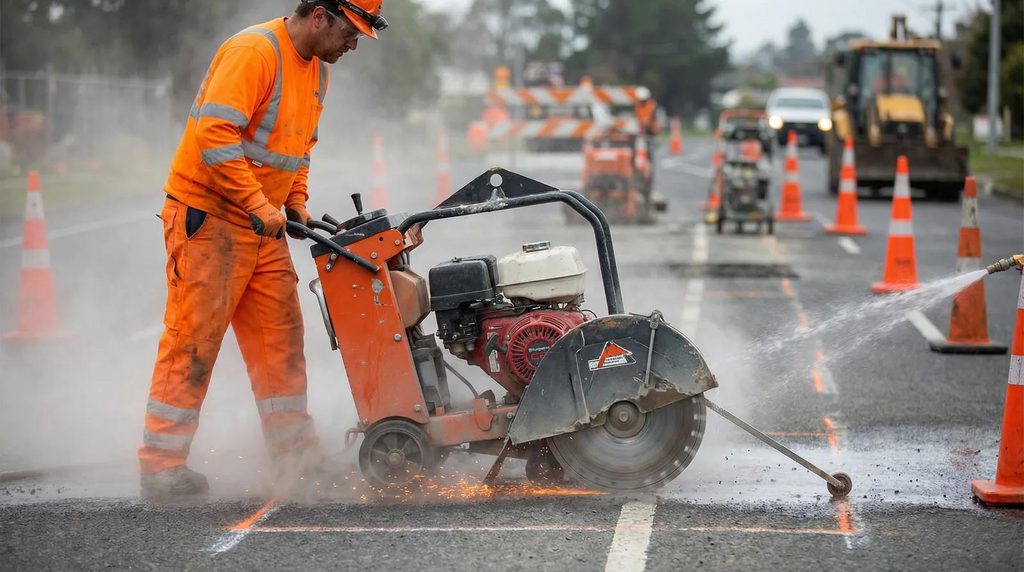
What Is a Concrete Cutter for Asphalt?
A concrete cutter for asphalt is a walk-behind or ride-on cutting machine used to create straight, accurate cuts in asphalt pavement. It normally consists of an engine or electric motor, a diamond blade, a blade guard, a cutting depth adjustment system, a water supply system, and a supporting frame with wheels.
The machine rotates a diamond cutting blade at high speed. As the blade contacts the asphalt surface, its diamond segments gradually grind through the pavement material, producing a controlled cutting line.
Unlike ordinary handheld cutting tools, a professional concrete cutter for asphalt is designed to provide greater cutting depth, improved stability, and consistent performance during extended construction operations.
Main components of a concrete cutter for asphalt:
- Power system: Provides the energy required to rotate the cutting blade.
- Diamond blade: Performs the actual asphalt cutting operation.
- Blade guard: Helps protect operators from debris and accidental contact.
- Depth adjustment system: Controls the cutting depth according to project requirements.
- Water supply system: Reduces dust and helps control blade temperature during wet cutting.
- Wheels and frame: Support the machine and help maintain a straight cutting path.
- Operating handle: Allows operators to control machine movement and cutting direction.
A suitable concrete cutter for asphalt should provide sufficient cutting power, stable operation, and compatibility with asphalt-specific diamond blades. These features are particularly important when cutting dense asphalt pavement or working on large road maintenance projects.
Why Use a Concrete Cutter for Asphalt?
Using a professional concrete cutter for asphalt offers several advantages over manual cutting methods and general-purpose construction tools.
Clean and Accurate Cutting
Road repair projects often require straight and consistent cutting lines. Irregular edges can make pavement removal more difficult and affect the quality of subsequent repairs.
A concrete cutter for asphalt helps contractors create clean cutting lines with controlled depth. This allows damaged pavement sections to be removed more efficiently and provides better edges for new asphalt installation.
Improved Construction Efficiency
Manual cutting methods require significant physical effort and may take considerable time, especially when working on thick asphalt pavement.
A powered concrete cutter for asphalt can complete long cutting lines more efficiently. Its adjustable cutting depth and stable frame help operators maintain a consistent working speed.
For contractors handling multiple road repair projects, improved cutting efficiency can reduce labor requirements and help shorten construction schedules.
Controlled Cutting Depth
Different asphalt projects require different cutting depths. Surface repairs may only require shallow cutting, while utility installation and pavement reconstruction may require deeper cuts.
A professional concrete cutter for asphalt usually features an adjustable blade system that allows operators to select the appropriate depth for the application.
Reduced Physical Labor
Compared with handheld cutting equipment, a walk-behind concrete cutter for asphalt carries most of the machine weight through its frame and wheels.
The operator mainly controls the cutting direction and forward movement rather than supporting the entire machine during operation.
Suitable for Different Road Construction Projects
A concrete cutter for asphalt can be used in various construction and maintenance applications, including:
- Asphalt road crack repair.
- Highway pavement maintenance.
- Parking lot resurfacing.
- Utility pipeline installation.
- Road drainage construction.
- Asphalt pavement removal.
- Expansion joint preparation.
- Municipal road reconstruction.
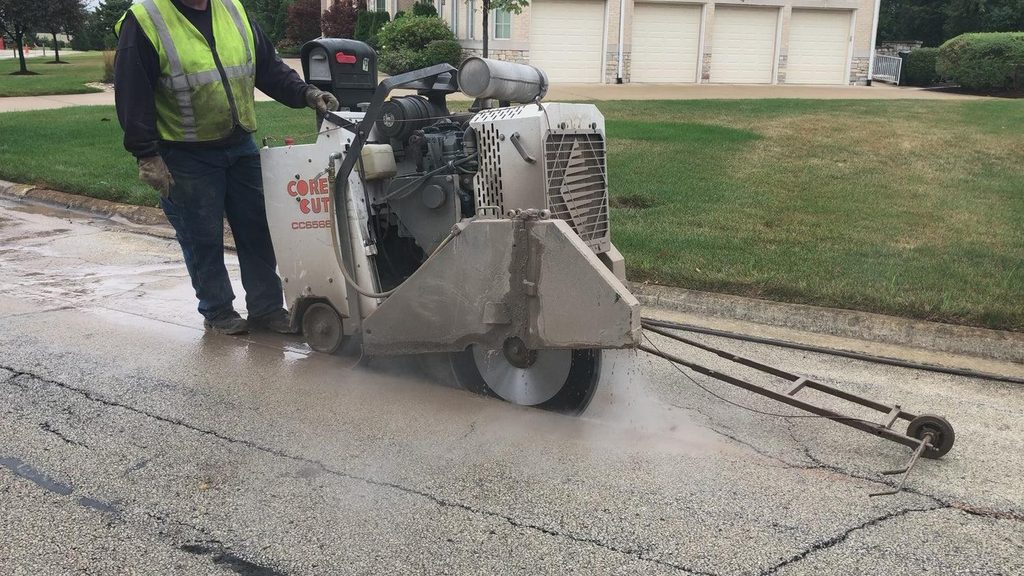
Different Types of Concrete Cutters for Asphalt
Not every concrete cutter for asphalt is suitable for every construction project. Machine selection should depend on cutting depth, working environment, power availability, and required productivity.
The main types include gasoline-powered, diesel-powered, electric, and ride-on road cutting machines.
Gasoline Concrete Cutter for Asphalt
A gasoline concrete cutter for asphalt is widely used in road maintenance and general construction because it offers mobility and does not require an external power supply.
Main advantages:
- Suitable for outdoor construction projects.
- Easy to transport between different job sites.
- Independent operation without electrical cables.
- Suitable for road repair and pavement cutting.
- Available in different engine power configurations.
Gasoline models are particularly practical for small and medium-sized contractors who need flexible equipment for different road construction tasks.
However, operators should consider fuel consumption, engine maintenance, exhaust emissions, and noise levels.
Diesel Concrete Cutter for Asphalt
A diesel concrete cutter for asphalt is generally designed for demanding outdoor applications. Diesel engines are often selected for their torque characteristics and suitability for extended operation.
Main advantages:
- Suitable for heavy-duty construction environments.
- Good performance during extended outdoor operation.
- Available in high-power configurations.
- Suitable for contractors handling large pavement projects.
Diesel models may be particularly appropriate for road construction companies working on highways, industrial roads, and large-scale infrastructure projects.
Electric Concrete Cutter for Asphalt
An electric concrete cutter for asphalt uses an electric motor instead of a combustion engine.
Main advantages:
- No direct exhaust emissions during operation.
- Generally lower engine maintenance requirements.
- Suitable for locations with reliable electrical power.
- Convenient for indoor or restricted-emission environments when appropriate.
However, the availability of electrical power, cable management, voltage compatibility, and motor protection must be considered before purchasing an electric concrete cutter for asphalt.
Ride-On Concrete Cutter for Asphalt
A ride-on concrete cutter for asphalt is designed for large-scale pavement cutting operations. Unlike walk-behind models, the operator sits on the machine and controls its movement.
Main advantages:
- Suitable for extensive road cutting projects.
- Designed for high-volume construction operations.
- Provides an operator-controlled working platform.
- Suitable for demanding infrastructure applications.
Ride-on equipment generally requires a larger working area, greater transportation capacity, and a higher investment in maintenance and operator training.
Comparison of Different Concrete Cutters for Asphalt
| Machine Type | Power Source | Main Applications | Key Advantages |
|---|---|---|---|
| Gasoline cutter | Gasoline engine | Road repairs, parking lots | Flexible and mobile |
| Diesel cutter | Diesel engine | Heavy-duty road construction | Suitable for extended outdoor work |
| Electric cutter | Electric motor | Areas with power access | No direct exhaust emissions |
| Ride-on cutter | Engine or motor | Large pavement projects | Suitable for extensive cutting operations |
The best concrete cutter for asphalt depends on the actual working environment rather than simply the machine’s power rating.
How to Choose the Right Concrete Cutter for Asphalt
Choosing the right concrete cutter for asphalt is one of the most important decisions for construction contractors. A machine that matches the pavement conditions and project requirements can improve cutting quality, reduce operating difficulties, and extend equipment service life.
Before purchasing a concrete cutter for asphalt, consider the following factors.
Cutting Depth
Cutting depth determines how thick an asphalt layer the machine can cut in one operation.
Different projects require different cutting depths. For example, shallow pavement repairs may only require cutting through the upper asphalt layer, while utility trenching may require deeper cutting.
When selecting a concrete cutter for asphalt, check the maximum cutting depth and confirm whether it meets your project requirements.
| Application | Cutting Requirements | Recommended Machine |
|---|---|---|
| Asphalt crack repair | Shallow and controlled cuts | Small walk-behind cutter |
| Parking lot maintenance | Medium-depth cutting | Standard road cutter |
| Road reconstruction | Deeper pavement cutting | Heavy-duty road cutter |
| Utility trenching | Deep and continuous cutting | High-power road cutter |
| Highway maintenance | Long and consistent cutting lines | Professional road cutter |
It is important to remember that the actual cutting depth depends on blade diameter, machine design, blade flange clearance, and operating conditions.
Engine Power and Performance
Engine power directly influences the cutting performance of a concrete cutter for asphalt.
A machine with insufficient power may struggle when cutting dense pavement or operating at greater depths. Excessive cutting resistance can also reduce blade speed and increase wear.
When evaluating a concrete cutter for asphalt, consider:
- Engine rated power.
- Engine displacement.
- Continuous operating capability.
- Blade rotation speed.
- Fuel consumption.
- Engine cooling performance.
For small repair projects, a compact gasoline concrete cutter for asphalt may be sufficient. For large construction projects, contractors may prefer a heavy-duty machine with a higher-power engine.
However, engine power should always be evaluated together with blade specifications and transmission efficiency.
Blade Diameter and Compatibility
The diamond blade is one of the most important components of a concrete cutter for asphalt.
Blade diameter affects the maximum cutting depth, while blade design determines its suitability for different pavement materials.
Common road saw blade diameters include:
| Blade Diameter | Typical Application | Main Consideration |
|---|---|---|
| 300 mm | Small pavement repairs | Suitable for shallow cutting |
| 350 mm | General road maintenance | Balanced cutting capability |
| 400 mm | Medium-depth pavement cutting | Requires compatible machine design |
| 450 mm | Deeper pavement cutting | Requires adequate power |
| 500 mm and above | Heavy-duty road cutting | Suitable for specialized equipment |
These are common equipment and blade size categories, not guaranteed cutting depths. Actual performance depends on the machine and blade configuration.
When purchasing a concrete cutter for asphalt, confirm the maximum permitted blade diameter, arbor hole size, blade thickness, and maximum rotational speed.
Machine Weight and Stability
Machine weight affects stability, transportation, and operator control.
A heavier concrete cutter for asphalt may provide better stability during cutting, particularly when working with large blades or dense pavement.
However, excessive weight can make transportation and loading more difficult.
Consider the following:
- Whether one or two workers can move the machine.
- Whether the machine can be loaded onto a transport vehicle.
- Whether the wheels provide sufficient support.
- Whether the frame remains stable during cutting.
- Whether the handle offers comfortable operation.
For contractors who frequently move between job sites, a practical balance between weight and stability is important.
Water Supply and Dust Control
Asphalt cutting generates dust and debris. A water supply system can help control airborne dust and reduce blade temperature during wet cutting.
A concrete cutter for asphalt equipped with a water tank and spray system can provide a more controlled cutting process.
Before purchasing, check:
- Water tank capacity.
- Spray nozzle arrangement.
- Water distribution around the blade.
- Hose connection design.
- Ease of cleaning and maintenance.
The water supply system should deliver sufficient water to the blade without unnecessarily flooding the work area.
Frame Design and Cutting Adjustment
A well-designed frame helps maintain cutting direction and improves operating stability.
A professional concrete cutter for asphalt should have a strong supporting frame, smooth-running wheels, and an easy-to-operate depth adjustment mechanism.
Look for the following features:
- Heavy-duty steel frame.
- Adjustable cutting depth.
- Convenient handle positioning.
- Stable blade guard.
- Easy blade installation.
- Accessible maintenance components.
These details may seem relatively minor, but they can make a significant difference during daily construction operations.
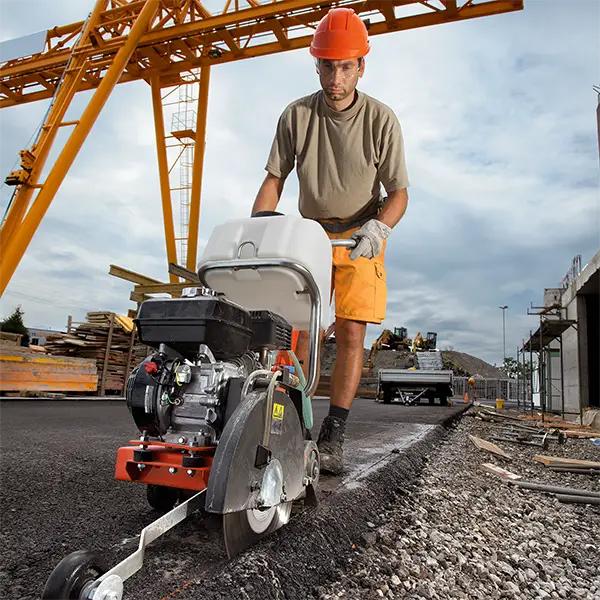
Concrete Cutter for Asphalt: Asphalt Blade Selection
Selecting the correct blade is just as important as choosing the concrete cutter for asphalt itself.
Asphalt is generally softer and more abrasive than ordinary concrete. Its aggregate structure and bitumen content create different cutting conditions.
Using an unsuitable concrete blade may result in excessive segment wear, reduced cutting efficiency, or poor cutting performance.
Asphalt-Specific Diamond Blades
An asphalt-specific diamond blade is designed to handle the abrasive characteristics of asphalt pavement.
Its segment design and bond formulation help maintain cutting performance while managing wear.
When selecting an asphalt blade for a concrete cutter for asphalt, consider:
- Diamond segment quality.
- Segment height.
- Bond hardness.
- Blade diameter.
- Maximum operating speed.
- Wet or dry cutting compatibility.
The correct blade should be selected according to the pavement material and the manufacturer’s recommendations.
Asphalt Blades vs. Concrete Blades
Although both blades may be used with a concrete cutter for asphalt, they are not necessarily interchangeable in terms of cutting performance.
| Comparison | Asphalt Diamond Blade | Concrete Diamond Blade |
|---|---|---|
| Main material | Asphalt pavement | Concrete |
| Material characteristics | Generally abrasive | Generally harder and more rigid |
| Segment bond | Designed for asphalt conditions | Designed for concrete conditions |
| Cutting application | Asphalt roads and pavements | Concrete floors and structures |
| Main consideration | Resistance to abrasive wear | Cutting efficiency in hard materials |
Using the correct blade helps improve the performance of a concrete cutter for asphalt and reduces unnecessary blade replacement.
How to Maintain Asphalt Cutting Blades
Proper blade maintenance can help extend service life and maintain consistent cutting performance.
Recommended practices include:
Inspect the blade before every operation.
Check for cracks, missing segments, or visible damage.
Confirm that the blade is installed in the correct direction.
Use the recommended operating speed.
Maintain an appropriate water supply during wet cutting.
Avoid forcing the blade through the pavement.
Replace damaged blades immediately.
Never operate a concrete cutter for asphalt with a cracked, deformed, or improperly mounted blade.
Applications of a Concrete Cutter for Asphalt
A professional concrete cutter for asphalt is widely used in road construction, pavement maintenance, and infrastructure development.
Different applications have different cutting requirements, so selecting the correct machine configuration is essential.
Asphalt Road Repair
Road surfaces may develop potholes, cracks, and damaged sections because of traffic loads, temperature changes, water penetration, and aging pavement materials.
A concrete cutter for asphalt helps contractors cut around damaged areas and create regular boundaries before removing the old pavement.
This process makes it easier to prepare the repair area and install new asphalt.
Parking Lot Construction and Maintenance
Parking lots require regular maintenance because of vehicle traffic, surface deterioration, and drainage problems.
A concrete cutter for asphalt can be used to cut pavement around damaged sections, prepare installation joints, and assist with resurfacing operations.
Compact walk-behind models are particularly useful when working in parking areas with limited space.
Utility Pipeline Installation
Water pipes, electrical cables, gas pipelines, and communication systems are often installed beneath asphalt roads.
A concrete cutter for asphalt allows contractors to create controlled cutting lines before excavating the pavement.
Accurate cutting helps define the trench boundaries and can reduce unnecessary pavement damage.
Highway and Municipal Road Maintenance
Highways and municipal roads require specialized maintenance equipment because of their traffic volume and construction requirements.
A professional concrete cutter for asphalt can be used to prepare pavement sections for reconstruction, repair expansion joints where applicable, and assist with damaged surface removal.
For these projects, machine durability, cutting consistency, and operating efficiency are especially important.
Drainage and Road Infrastructure Projects
Drainage improvements often require cutting existing asphalt pavement to install drainage channels, underground pipes, and other infrastructure components.
A suitable concrete cutter for asphalt helps contractors establish clear cutting boundaries and prepare the pavement for excavation.
How to Operate a Concrete Cutter for Asphalt Safely
Correct operating procedures are essential for protecting workers, maintaining cutting quality, and extending machine service life.
Even a high-performance concrete cutter for asphalt can become dangerous if it is incorrectly operated or poorly maintained.
Inspect the Machine
Before starting the concrete cutter for asphalt, inspect the engine, blade, blade guard, wheels, and operating handle.
Check that all fasteners are properly tightened and that the blade is suitable for asphalt cutting.
Prepare the Working Area
Remove loose materials, stones, and unnecessary objects from the cutting path.
Identify underground utilities before cutting. This is particularly important for road trenching and infrastructure installation.
Set up appropriate traffic control measures when working on public roads.
Install the Correct Blade
Select an asphalt-specific diamond blade compatible with the concrete cutter for asphalt.
Confirm the blade diameter, arbor size, rotational speed rating, and installation direction.
Make sure the blade guard is correctly installed.
Start the Machine
Start the machine according to the manufacturer’s operating instructions.
Allow the engine or motor to reach the appropriate operating condition before beginning the cutting operation.
Adjust the Cutting Depth
Set the required cutting depth according to the pavement thickness and project requirements.
Avoid attempting to cut too deeply in one pass if the machine and blade are not designed for that operation.
Begin Cutting
Lower the blade gradually into the asphalt pavement and guide the concrete cutter for asphalt along the marked cutting line.
Maintain a steady forward movement. Do not push the machine excessively or force the blade through resistant material.
Finish and Inspect
After completing the cutting operation, disengage the blade according to the manufacturer’s instructions.
Inspect the cutting line and machine condition. Clean the equipment and remove accumulated asphalt debris before storage.
Important safety precautions:
- Wear safety glasses, hearing protection, gloves, and suitable protective footwear.
- Use appropriate respiratory protection when required by the dust exposure assessment.
- Keep unauthorized personnel away from the cutting area.
- Never remove the blade guard during operation.
- Never adjust or replace the blade while the machine is running.
- Follow the manufacturer’s instructions for wet and dry cutting.
- Stop operation immediately if unusual vibration or abnormal noise occurs.
Maintenance Tips for a Concrete Cutter for Asphalt
Regular maintenance is essential for keeping a concrete cutter for asphalt in good working condition.
Asphalt debris, dust, vibration, and continuous operation can affect machine components over time.
A preventive maintenance schedule helps identify potential problems before they cause unexpected downtime.
Daily Maintenance
After each working day:
- Clean asphalt residue from the machine.
- Inspect the diamond blade and blade guard.
- Check the water supply system.
- Inspect wheels and adjustment mechanisms.
- Check visible bolts and fasteners.
- Look for fuel, oil, or water leakage.
Engine and Motor Maintenance
For gasoline and diesel concrete cutter for asphalt models, engine maintenance should follow the manufacturer’s recommended schedule.
Important maintenance tasks include:
- Checking engine oil levels.
- Cleaning or replacing air filters.
- Inspecting spark plugs on gasoline models.
- Checking fuel lines and fuel filters.
- Inspecting the cooling system.
- Monitoring abnormal engine noise.
For electric concrete cutters for asphalt, inspect power cables, connectors, switches, and motor ventilation.
Blade and Transmission Maintenance
Inspect the blade regularly for segment damage and uneven wear.
Also check the blade mounting flange, spindle, bearings, and drive belt where applicable.
A loose belt, worn bearing, or damaged flange can negatively affect cutting performance.
Maintenance Schedule
| Component | Inspection Frequency | Recommended Action |
|---|---|---|
| Diamond blade | Before each use | Check for cracks and segment damage |
| Engine oil | According to engine manual | Check and replace as required |
| Air filter | Regularly | Clean or replace |
| Drive belt | Regularly | Inspect tension and wear |
| Water system | Daily | Clean nozzles and check hoses |
| Wheels | Regularly | Inspect wear and alignment |
| Blade guard | Before each use | Check mounting and damage |
| Fasteners | Regularly | Check and tighten as specified |
A well-maintained concrete cutter for asphalt can provide more reliable performance and reduce unexpected maintenance costs throughout its working life.
Common Problems When Using a Concrete Cutter for Asphalt
Understanding common operating problems can help contractors identify issues quickly and avoid unnecessary downtime.
| Common Problem | Possible Cause | Recommended Solution |
|---|---|---|
| Slow cutting speed | Incorrect blade or insufficient power | Check blade selection and machine specifications |
| Excessive blade wear | Unsuitable blade bond or abrasive material | Use an asphalt-specific blade |
| Uneven cutting lines | Poor machine alignment or operator control | Check wheels and guide system |
| Excessive vibration | Damaged blade or loose components | Stop and inspect the blade and mounting system |
| Engine overheating | Insufficient cooling or maintenance | Check cooling system and air filters |
| Poor dust control | Insufficient water supply | Inspect tank, hoses, and spray nozzles |
| Difficult depth adjustment | Worn or obstructed adjustment mechanism | Clean and inspect the adjustment system |
When a concrete cutter for asphalt experiences abnormal vibration, overheating, or unusual operating noise, stop the machine and identify the cause before continuing.
Do not attempt to solve mechanical problems by increasing cutting pressure or forcing the machine forward.
Concrete Cutter for Asphalt vs. Handheld Asphalt Cutting Tools
Some small pavement repair jobs can be completed using handheld cutting tools. However, professional road construction projects usually require a dedicated concrete cutter for asphalt.
The differences are particularly noticeable in cutting depth, machine stability, and continuous operation.
| Comparison | Concrete Cutter for Asphalt | Handheld Cutting Tool |
|---|---|---|
| Cutting depth | Depends on machine and blade configuration | Generally more limited |
| Cutting accuracy | Stable guided cutting | More dependent on operator control |
| Productivity | Suitable for longer cutting lines | Suitable for smaller jobs |
| Operator effort | Machine supported by wheels and frame | Requires more manual handling |
| Applications | Road maintenance and construction | Small repairs and restricted areas |
| Blade size | Available in larger diameters | Usually smaller |
For contractors who regularly perform asphalt pavement cutting, investing in a dedicated concrete cutter for asphalt can improve workflow efficiency and cutting consistency.
For occasional small repairs, handheld equipment may be sufficient.
What Should Contractors Check Before Purchasing?
When purchasing a concrete cutter for asphalt, contractors should evaluate the complete machine rather than focusing on a single specification.
The following checklist can help buyers compare different manufacturers and equipment configurations.
| Purchasing Factor | Questions to Ask |
|---|---|
| Power system | Is the engine or motor suitable for the application? |
| Cutting depth | Does the machine meet the required cutting depth? |
| Blade compatibility | Which blade diameters and arbor sizes are supported? |
| Machine structure | Is the frame designed for stable operation? |
| Water system | Is a water tank or external connection available? |
| Operation | Is the depth adjustment easy to use? |
| Spare parts | Are common replacement parts available? |
| Maintenance | Can key components be accessed easily? |
| Technical support | Does the manufacturer provide operating guidance? |
| Customization | Are different engine, voltage, or blade configurations available? |
Choose a Reliable Manufacturer
A reliable concrete cutter for asphalt manufacturer should provide clear technical specifications, product documentation, spare parts support, and operating instructions.
For international buyers, it is also important to confirm:
- Export experience.
- Available certifications and compliance documentation.
- Packaging and shipping arrangements.
- Spare parts availability.
- Warranty conditions.
- Technical communication and after-sales support.
Working directly with an experienced construction machinery manufacturer can make it easier to confirm machine specifications and select the correct configuration for local working conditions.
Confirm the Machine Before Ordering
Before placing an order, buyers should request product photographs, operating videos, technical specifications, and relevant machine details.
If the concrete cutter for asphalt will be used for a specific pavement thickness, provide that information to the manufacturer.
This helps the supplier recommend a suitable engine configuration, blade diameter, and machine structure.
Conclusion
Choosing the right concrete cutter for asphalt is essential for achieving efficient, accurate, and reliable pavement cutting operations.
Whether contractors are working on small road repairs, parking lot maintenance, utility trenching, or large highway construction projects, the right concrete cutter for asphalt can significantly improve construction efficiency and cutting quality.
Before purchasing, buyers should carefully evaluate several important factors:
- Power system: Choose an engine or motor that matches the cutting requirements.
- Cutting depth: Confirm that the machine can handle the required pavement thickness.
- Blade compatibility: Select an asphalt-specific diamond blade.
- Machine stability: Consider frame construction, weight, and wheel design.
- Water supply: Ensure effective blade cooling and dust control.
- After-sales support: Choose a manufacturer that can provide spare parts and technical assistance.
A high-quality concrete cutter for asphalt is not simply a cutting machine. It is an important investment for road construction contractors, pavement maintenance companies, equipment rental businesses, and machinery distributors.
By comparing machine specifications and understanding actual working conditions, buyers can select a concrete cutter for asphalt that delivers reliable performance, consistent cutting results, and long-term operational value.
If you need concrete cutters,concrete grinders,concrete power trowels or any other services, please feel free to contact us!
Email: teresa@huashuo-machine.com
WhatsApp: +86 15554448948
Facebook: https://www.facebook.com/profile.php?id=61560318418325
Tik Tok: https://www.tiktok.com/@huateresa
FAQ
Can a concrete cutter be used for asphalt?
Yes. A concrete cutter for asphalt can cut asphalt pavement when equipped with a suitable asphalt-specific diamond blade. The machine must also have sufficient power and a compatible blade configuration for the required cutting depth.
What blade is best for a concrete cutter for asphalt?
An asphalt-specific diamond blade is generally recommended. Asphalt is relatively abrasive, so the blade should have a suitable diamond segment design and bond formulation. Always select a blade that matches the concrete cutter for asphalt manufacturer’s specifications.
What is the difference between an asphalt cutter and a concrete cutter?
An asphalt cutter and a concrete cutter may share a similar machine structure, but their blades and cutting configurations can differ. Asphalt cutting generally requires blades designed for abrasive pavement materials, while concrete cutting requires blades suitable for harder concrete aggregates.
A properly configured concrete cutter for asphalt can perform asphalt cutting efficiently.
What blade diameter should I choose for asphalt cutting?
Common blade diameters include 300 mm, 350 mm, 400 mm, 450 mm, and 500 mm or larger. The correct diameter depends on the required cutting depth, machine specifications, and blade compatibility.
Before purchasing a concrete cutter for asphalt, confirm the maximum blade diameter supported by the machine.
Is a gasoline concrete cutter suitable for asphalt roads?
Yes. A gasoline concrete cutter for asphalt is a popular option for outdoor road maintenance and pavement repair projects. It offers mobility and does not require an external electrical power supply.
It is particularly suitable for contractors who frequently work at different construction sites.
How deep can a concrete cutter for asphalt cut?
The maximum cutting depth depends on blade diameter, machine design, blade mounting clearance, and equipment specifications.
Small machines are generally used for shallow cutting, while heavy-duty road cutters can accommodate larger blades for deeper pavement cutting.
Always check the manufacturer’s rated maximum cutting depth before purchasing.
Does a concrete cutter for asphalt need water during operation?
Water is commonly used during wet cutting to help control dust and reduce blade temperature. Some machines support dry cutting with compatible blades and appropriate dust-control measures.
Operators should always follow the blade and machine manufacturer’s recommendations.
How do I maintain a concrete cutter for asphalt?
Regular maintenance includes cleaning asphalt residue, checking the diamond blade, inspecting the engine or motor, checking drive belts, maintaining the water supply system, and tightening fasteners according to the manufacturer’s instructions.
Proper maintenance helps keep a concrete cutter for asphalt operating reliably.
Can a concrete cutter for asphalt be used for concrete pavement?
Yes, provided that the machine is designed for the application and fitted with an appropriate concrete-cutting diamond blade. The blade, power requirements, and cutting parameters should be checked before switching between asphalt and concrete.
How do I choose a reliable concrete cutter for asphalt manufacturer?
Look for a manufacturer with construction machinery production experience, stable product quality, clear technical specifications, and dependable spare parts support.
Ask for machine operating videos, detailed specifications, blade compatibility information, and warranty terms before placing an order.
If you are purchasing a concrete cutter for asphalt for distribution or construction projects, communicating your required cutting depth, blade diameter, engine type, and working conditions will help the manufacturer recommend the most suitable machine.