
Introduction
Concrete slabs are one of the most important structural elements in modern construction. From industrial warehouses and commercial buildings to residential foundations, parking areas, highways, and outdoor pavements, concrete slabs provide the strength and stability required for long-term use. However, simply pouring concrete is not enough to achieve a durable and attractive surface. Proper finishing is a critical step that directly affects the strength, appearance, and service life of the concrete.
A rough or poorly finished concrete slab may develop problems such as surface cracks, uneven areas, dusting, weak top layers, and reduced resistance to heavy traffic. For this reason, professional contractors rely on mechanical finishing equipment to improve concrete quality. Among these machines, the power float trowel for concrete slab has become one of the most widely used solutions for achieving smooth and high-performance concrete surfaces.
A power float trowel for concrete slab is a specialized concrete finishing machine designed to flatten, compact, and polish concrete after the initial setting stage. By using rotating blades powered by an engine or electric motor, the machine applies controlled pressure to the concrete surface, helping remove imperfections and create a dense, smooth finish.
Compared with traditional manual finishing methods, using a power float trowel for concrete slab offers significant advantages, including higher productivity, more consistent finishing quality, reduced labor requirements, and improved surface durability. This makes it an essential tool for contractors working on medium and large concrete projects.
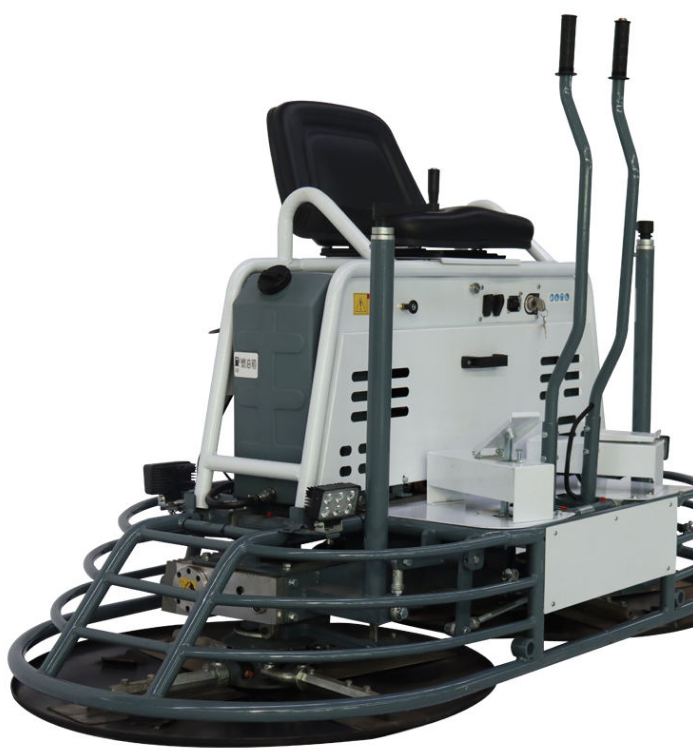
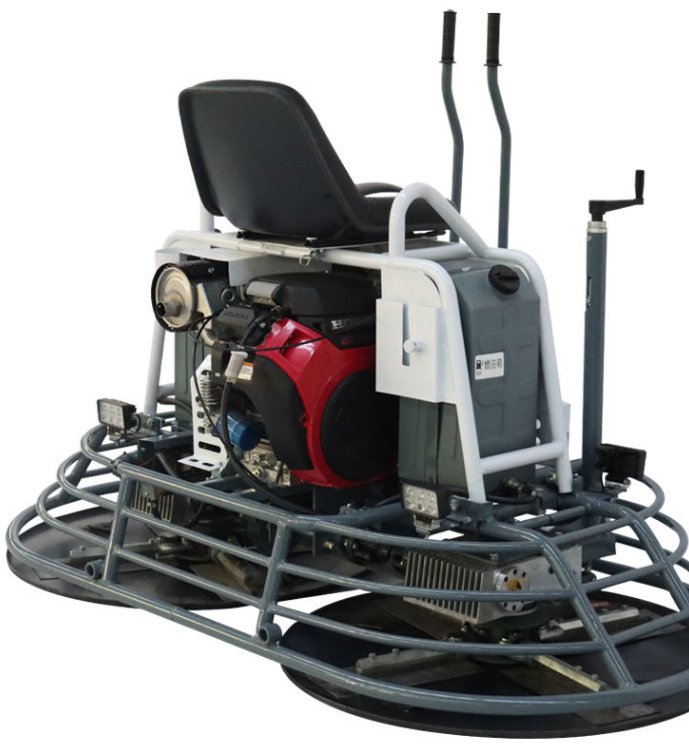
What Is a Power Float Trowel for Concrete Slab?
A power float trowel for concrete slab is a mechanical concrete finishing machine equipped with one or more rotating blades that operate on the surface of freshly poured concrete. The main purpose of the machine is to create a level, compact, and smooth concrete surface after the concrete has reached the appropriate working condition.
Unlike concrete screeds that are mainly used for initial leveling, a power float trowel for concrete slab is mainly used for surface finishing. It works by rotating blades across the concrete surface, gradually improving the texture and density.
The machine is commonly used after:
Concrete pouring
Initial leveling
Surface preparation
Concrete setting
The basic construction process is:
Concrete mixing → Concrete pouring → Initial leveling → Concrete setting → Power floating → Final finishing
A professional concrete finishing process usually requires several passes with the power float trowel for concrete slab to achieve the desired result.
Working Principle of Power Float Trowel for Concrete Slab
Understanding the working principle helps operators achieve better results.
A power float trowel for concrete slab works through the rotation of blades driven by an engine or motor. When the blades rotate, they generate friction and pressure on the concrete surface.
The finishing process mainly includes three effects:
Surface Leveling
During the first floating stage, the rotating blades help remove small uneven areas caused during concrete pouring. The machine pushes high spots downward and fills small low areas with cement paste.
This creates a more uniform concrete surface.
Concrete Compaction
The pressure created by the rotating blades compresses the upper concrete layer.
Benefits include:
- Higher surface density
- Reduced air pockets
- Better wear resistance
- Lower surface dusting
A properly operated power float trowel for concrete slab helps produce stronger and longer-lasting floors.
Surface Polishing
During the final finishing stage, the blade angle and speed are adjusted to create a smoother appearance.
The final surface becomes:
- More attractive
- Easier to clean
- More resistant to abrasion
- Suitable for heavy traffic areas
Main Types of Power Float Trowel for Concrete Slab
Different construction projects require different machine designs. Choosing the correct type of power float trowel for concrete slab can improve efficiency and finishing quality.
| Type | Description | Recommended Application |
|---|---|---|
| Walk-Behind Power Float Trowel | Operator controls the machine while walking behind | Small and medium concrete slabs |
| Ride-On Power Float Trowel | Operator sits on the machine during operation | Large industrial floors and warehouses |
| Electric Power Float Trowel | Uses electric motor as power source | Indoor projects with power supply |
| Gasoline Power Float Trowel | Uses gasoline engine | Outdoor construction sites |
| Battery Power Float Trowel | Uses rechargeable battery system | Small projects requiring low noise |
Walk-Behind Power Float Trowel
The walk-behind model is one of the most common types used by contractors.
Advantages:
- Easy transportation
- Simple operation
- Flexible movement
- Suitable for limited working spaces
It is commonly used for:
- Residential concrete floors
- Small workshops
- Sidewalks
- Garage floors
Ride-On Power Float Trowel
For large concrete slabs, a ride-on model provides much higher efficiency.
Advantages:
- Covers large areas quickly
- Reduces operator fatigue
- Provides consistent finishing pressure
- Suitable for continuous operation
Typical applications include:
- Warehouses
- Airports
- Industrial plants
- Large parking facilities
Main Components of Power Float Trowel for Concrete Slab
Knowing the machine structure allows operators to use and maintain equipment correctly.
| Component | Function |
|---|---|
| Engine/Motor | Provides power for blade rotation |
| Gearbox | Transfers power to rotating blades |
| Blades | Perform floating and finishing operations |
| Float Pan | Used for initial smoothing |
| Handle Control System | Controls direction and movement |
| Blade Pitch Control | Adjusts blade angle |
| Safety Guard | Protects operators |
| Frame Structure | Supports machine components |
Each component plays an important role in the performance of a power float trowel for concrete slab.
Preparing Before Using Power Float Trowel for Concrete Slab
Proper preparation is essential before starting operation. Many concrete finishing problems happen because operators ignore preparation steps.
Check Concrete Condition
Before using the machine, confirm that the concrete has reached the correct hardness.
The concrete should:
✔ Have no visible surface water
✔ Support the weight of the machine
✔ Leave only shallow footprints
✔ Still allow blade marks to disappear gradually
If the concrete is too soft:
- The machine may sink
- Surface damage may occur
- Cement paste may separate
If the concrete is too hard:
- Finishing efficiency decreases
- The surface may become uneven
Inspect the Power Float Trowel
Before operation, check:
| Inspection Item | Purpose |
|---|---|
| Engine oil | Prevent mechanical damage |
| Fuel level | Ensure continuous operation |
| Blade condition | Maintain finishing quality |
| Bolts and fasteners | Improve safety |
| Control system | Ensure smooth operation |
A well-prepared power float trowel for concrete slab provides better performance and reduces downtime.
Step-by-Step Operation Guide of Power Float Trowel for Concrete Slab
Using a power float trowel for concrete slab correctly requires experience and proper operating procedures. The machine should not simply be placed on concrete and moved randomly. Each working stage has a specific purpose, and the operator needs to adjust speed, blade angle, and movement direction according to concrete conditions.
The complete operation process usually includes four stages:
Machine Preparation → Initial Floating → Surface Finishing → Final Polishing
Following these steps helps achieve a smooth, strong, and durable concrete slab.
Start and Test the Power Float Trowel
Before entering the concrete surface, start the machine and check whether all functions operate properly.
For gasoline-powered models:
- Check fuel level
- Start the engine according to the manufacturer’s instructions
- Allow the engine to warm up
- Test throttle response
- Confirm blade rotation is smooth
For electric models:
- Check power connection
- Confirm voltage compatibility
- Inspect cables and switches
During testing:
- Do not suddenly increase speed
- Make sure blades rotate evenly
- Check for abnormal vibration or noise
A stable starting process ensures that the power float trowel for concrete slab works efficiently throughout the finishing operation.
Begin the First Floating Process
The first pass is called the floating stage. The purpose of this stage is not to create a polished surface but to flatten and prepare the concrete.
During the first floating operation:
- Use float blades or float pan
- Keep blade angle flat
- Operate at lower speed
- Move slowly and evenly
- Avoid sudden turns
The first floating pass helps:
- Remove minor surface irregularities
- Push coarse aggregates downward
- Bring cement paste upward
- Improve surface consistency
For large concrete slabs, operators usually move the power float trowel for concrete slab in straight lines to ensure uniform coverage.
Adjust Blade Angle for Better Finishing
After the initial floating process, the concrete becomes firmer. At this stage, the operator can adjust the blade pitch.
Increasing the blade angle creates more pressure on the concrete surface.
Benefits include:
- Smoother finish
- Higher surface density
- Improved appearance
- Better wear resistance
However, excessive blade angle adjustment too early may damage the surface.
The operator should gradually increase the blade angle according to concrete hardness.
| Concrete Condition | Blade Adjustment |
|---|---|
| Soft concrete surface | Flat blade position |
| Medium hardness | Slight blade angle |
| Harder finishing stage | Higher blade angle |
Perform Final Finishing Passes
The final finishing stage creates the smooth appearance that many customers expect.
During final finishing:
- Increase blade speed gradually
- Use finishing blades
- Make overlapping passes
- Maintain consistent movement
Avoid stopping the machine in one location because this can create:
- Uneven marks
- Surface depressions
- Different gloss levels
A skilled operator using a power float trowel for concrete slab can achieve a professional-grade surface without additional grinding.
Operating Techniques for Better Concrete Slab Results
Although the machine itself is important, operator skills have a major influence on the final quality.
Maintain Constant Movement
The operator should keep the machine moving continuously.
Correct operation:
✔ Smooth forward movement
✔ Even speed
✔ Controlled turning
Incorrect operation:
✘ Sudden stopping
✘ Fast direction changes
✘ Excessive pressure in one area
Consistent movement helps the power float trowel for concrete slab create an even finish.
Work in Multiple Directions
For large concrete slabs, changing movement direction between passes improves surface quality.
Recommended sequence:
First pass:
- Move north to south
Second pass:
- Move east to west
Final pass:
- Follow the required finishing direction
This technique reduces visible lines and improves flatness.
Avoid Overworking the Concrete
Too many passes in the same area may damage the surface.
Possible problems:
- Excessive moisture loss
- Surface burning
- Reduced texture
- Uneven appearance
The operator should stop when the desired finish is achieved.
Choosing the Right Blades for Power Float Trowel for Concrete Slab
Blades are one of the most important parts of a concrete finishing machine. Different blades create different surface effects.
Choosing the correct blades allows the power float trowel for concrete slab to achieve better performance.
Float Blades
Float blades are mainly used during the first stage.
Functions:
- Flatten uneven surfaces
- Improve leveling
- Move cement paste upward
- Prepare for final finishing
Characteristics:
- Larger surface contact area
- Lower pressure
- Suitable for softer concrete
Finishing Blades
Finishing blades are used during the final stage.
Functions:
- Smooth concrete surface
- Increase density
- Create polished appearance
Characteristics:
- Higher blade angle
- More concentrated pressure
- Suitable for harder concrete
Combination Blades
Combination blades can perform both floating and finishing operations.
Advantages:
- Reduce blade replacement frequency
- Suitable for general projects
- Easy operation
Plastic Blades
Plastic blades are used for special applications.
Suitable for:
- Decorative concrete
- Sensitive surfaces
- Projects requiring reduced marking
Blade Selection Table
| Blade Type | Working Stage | Main Purpose |
|---|---|---|
| Float Blade | Initial stage | Leveling and flattening |
| Finishing Blade | Final stage | Smooth polishing |
| Combination Blade | Both stages | General finishing |
| Plastic Blade | Special applications | Surface protection |
How to Choose the Right Power Float Trowel for Concrete Slab
Selecting the correct machine depends on several factors:
- Concrete slab area
- Working environment
- Required finishing quality
- Power source availability
- Operator experience
A wrong selection may reduce efficiency and increase operating difficulty.
Consider Concrete Area Size
Project size is one of the most important selection factors.
| Project Size | Recommended Machine |
|---|---|
| Small residential slab | Walk-behind power float trowel |
| Medium workshop floor | Single-disc or medium-size model |
| Large warehouse floor | Ride-on power float trowel |
| Large industrial pavement | Heavy-duty ride-on model |
For small areas, flexibility is more important. For large areas, productivity becomes the priority.
Consider Power Source
Different environments require different power options.
| Power Type | Advantages | Suitable Location |
|---|---|---|
| Gasoline Engine | Strong power and mobility | Outdoor construction |
| Electric Motor | Low emissions and quiet operation | Indoor projects |
| Battery Power | Easy operation and portability | Small finishing jobs |
Consider Blade Diameter
Blade size affects working efficiency.
Larger blade diameter:
- Covers more area
- Improves productivity
- Suitable for large floors
Smaller blade diameter:
- Easier control
- Suitable for narrow areas
Applications of Power Float Trowel for Concrete Slab
A power float trowel for concrete slab is widely used across different industries because it improves concrete strength and appearance.
Industrial Warehouse Floors
Warehouses require strong floors because of:
- Forklift traffic
- Heavy equipment
- Continuous operation
A power float finish creates a dense surface that improves durability.
Parking Garages
Parking areas experience:
- Vehicle loads
- Tire friction
- Weather exposure
A properly finished slab reduces surface wear and improves service life.
Commercial Buildings
Shopping centers, offices, and public buildings require attractive flooring.
A power float trowel for concrete slab provides:
- Smooth appearance
- Easy cleaning
- Professional finish
Residential Concrete Floors
For homes, garages, and outdoor patios, power floating improves:
- Surface flatness
- Appearance
- Long-term performance
Industrial Pavement Projects
Factories and logistics centers often require large concrete surfaces.
Ride-on power float trowel for concrete slab machines can complete large areas efficiently while maintaining consistent quality.
Common Problems When Using Power Float Trowel for Concrete Slab and Solutions
Although a power float trowel for concrete slab is designed to simplify concrete finishing, improper operation can still cause surface defects. Understanding common problems and solutions helps operators achieve better results and avoid unnecessary repairs.
Concrete Surface Becomes Uneven
Possible Causes:
- Machine movement is too fast
- Operator changes direction suddenly
- Concrete hardness is inconsistent
- Blade pressure is not adjusted correctly
Solutions:
- Keep a steady operating speed
- Make smooth turns
- Adjust blade angle according to concrete conditions
- Ensure the concrete slab is properly leveled before finishing
A professional operator should use the power float trowel for concrete slab with controlled movement to maintain consistent surface quality.
Surface Cracks Appear After Finishing
Possible Causes:
- Starting the machine too early
- Excessive finishing passes
- Concrete drying too quickly
- Incorrect curing process
Solutions:
- Wait until the concrete reaches the correct hardness
- Avoid overworking the surface
- Follow proper concrete curing procedures
- Control environmental conditions when possible
A power float machine improves finishing quality, but it cannot correct problems caused by poor concrete mixing or curing.
Concrete Surface Has Burn Marks
Concrete burning happens when the blades create excessive friction on the surface.
Causes:
- Blade speed too high
- Too much blade pressure
- Repeated finishing in the same area
Solutions:
- Reduce blade speed
- Adjust blade angle gradually
- Avoid unnecessary passes
Proper operation of a power float trowel for concrete slab prevents overheating and surface damage.
Machine Leaves Visible Marks
Causes:
- Incorrect blade adjustment
- Uneven machine movement
- Concrete hardness differences
Solutions:
- Check blade condition
- Maintain consistent movement
- Use proper finishing timing
Common Problems and Solutions Table
| Problem | Possible Cause | Solution |
|---|---|---|
| Uneven surface | Incorrect operation speed | Move slowly and consistently |
| Surface cracks | Finishing too early | Wait for proper concrete setting |
| Burn marks | Excessive blade pressure | Adjust blade angle |
| Visible lines | Poor movement technique | Overlap working paths |
| Weak surface | Insufficient finishing | Use correct floating process |
Maintenance Guide for Power Float Trowel for Concrete Slab
Regular maintenance is essential to keep the machine operating efficiently. A well-maintained power float trowel for concrete slab can provide reliable performance for many years and reduce unexpected downtime.
Maintenance should include daily inspection, cleaning, lubrication, and replacement of worn parts.
Daily Maintenance After Use
After completing concrete finishing work, operators should clean and inspect the machine.
Recommended steps:
Clean Concrete Residue
Fresh concrete can quickly harden on machine components.
Clean:
- Blades
- Blade arms
- Protective guards
- Frame structure
Hardened concrete residue may affect blade balance and reduce finishing quality.
Check Blade Condition
Inspect blades for:
- Wear
- Bending
- Cracks
- Uneven edges
Damaged blades can create uneven concrete surfaces.
Replacing worn blades ensures the power float trowel for concrete slab continues to deliver smooth results.
Inspect Engine or Motor
For gasoline models:
Check:
- Engine oil
- Air filter
- Fuel system
- Spark plug condition
For electric models:
Check:
- Power cable
- Switches
- Motor ventilation
Regular Maintenance Schedule
| Maintenance Item | Recommended Frequency | Purpose |
|---|---|---|
| Clean blades | After every use | Prevent concrete buildup |
| Check engine oil | Regularly | Protect engine components |
| Inspect bolts | Weekly | Improve operating safety |
| Lubricate moving parts | Periodically | Reduce wear |
| Replace damaged blades | When necessary | Maintain finishing quality |
Safety Tips When Operating Power Float Trowel for Concrete Slab
Safety should always be a priority when operating construction equipment.
Although modern machines include safety features, improper operation may still cause accidents.
Wear Proper Protective Equipment
Operators should wear:
- Safety boots
- Gloves
- Eye protection
- Hearing protection
- Protective clothing
Inspect the Working Area
Before starting the machine:
- Remove obstacles
- Check for uneven ground
- Keep unauthorized people away
- Ensure enough working space
Avoid Touching Moving Parts
Never touch rotating blades while the machine is operating.
Before maintenance:
- Turn off the engine
- Disconnect power supply
- Wait until blades completely stop
Operate According to Manufacturer Instructions
Different models of power float trowel for concrete slab may have different operating methods.
Always follow:
- Starting procedures
- Blade adjustment methods
- Maintenance requirements
Professional Tips for Better Concrete Finishing Results
Experienced contractors use several techniques to improve finishing quality.
Choose the Correct Working Time
Timing is more important than machine speed.
The best results are achieved when concrete has:
- Enough strength to support equipment
- Enough moisture for finishing
- Suitable surface hardness
Start With Lower Speed
During initial floating:
- Use moderate speed
- Avoid aggressive finishing
- Allow the machine to gradually work the surface
Increasing speed too early may damage the slab.
Adjust Blade Angle Gradually
Blade adjustment should match concrete conditions.
Recommended approach:
Start with flat blades
Increase angle gradually
Use higher pressure only during final finishing
This method allows the power float trowel for concrete slab to achieve better surface density.
When working on large slabs:
- Overlap each pass slightly
- Avoid leaving untouched areas
- Keep movement consistent
This creates a more uniform finish.
Power Float Trowel for Concrete Slab vs Manual Finishing
Traditional manual finishing methods are still used in some small projects, but mechanical finishing provides significant advantages.
| Comparison | Manual Finishing | Power Float Trowel Finishing |
|---|---|---|
| Working Speed | Slow | Much faster |
| Surface Quality | Depends on worker skill | More consistent |
| Labor Requirement | More workers needed | Reduced labor |
| Large Area Application | Difficult | Highly suitable |
| Finishing Uniformity | Variable | Better consistency |
For modern construction projects, a power float trowel for concrete slab provides higher efficiency and better results compared with traditional methods.
How Power Float Trowel Improves Concrete Slab Quality
The main purpose of a power float trowel for concrete slab is not only making concrete look smoother but also improving its physical performance.
Benefits include:
Higher Surface Strength
Mechanical finishing compresses the top layer of concrete, making it stronger.
Better Wear Resistance
A dense surface performs better under:
- Vehicle traffic
- Foot traffic
- Industrial equipment
Reduced Dust Formation
Proper floating reduces weak particles on the surface and minimizes concrete dust.
Improved Appearance
A finished concrete slab becomes:
- Smoother
- More attractive
- Easier to maintain
Factors Affecting Power Float Trowel Performance
The final result depends on multiple factors, not only the machine itself.
| Factor | Effect on Finishing |
|---|---|
| Concrete mixture | Determines hardness and workability |
| Weather conditions | Affects drying speed |
| Operator experience | Influences surface quality |
| Blade selection | Determines finish type |
| Machine condition | Affects stability and efficiency |
Professional contractors consider all these factors when using a power float trowel for concrete slab.
Advanced Applications of Power Float Trowel for Concrete Slab
With the development of modern construction technology, concrete finishing requirements are becoming higher. Contractors are no longer only looking for a flat surface but also require concrete slabs with better durability, appearance, and long-term performance.
A power float trowel for concrete slab plays an important role in achieving these requirements. It is widely used in different projects where concrete floors need to withstand heavy loads, frequent traffic, and long-term use.
Industrial Factory Floors
Industrial floors often experience:
- Heavy machinery loads
- Forklift movement
- Continuous production activities
- Chemical exposure
A properly finished concrete slab provides:
- Higher impact resistance
- Reduced surface wear
- Easier cleaning
- Longer service life
Using a power float trowel for concrete slab allows contractors to create a dense and durable industrial floor surface.
Warehouse and Logistics Centers
Modern warehouses require large areas of flat concrete flooring because automated equipment and forklifts need smooth movement.
A professional concrete finishing process helps:
- Improve floor flatness
- Reduce equipment vibration
- Increase operational safety
- Lower future maintenance costs
For large warehouse projects, ride-on models of power float trowel for concrete slab are often preferred because they provide higher working efficiency.
Parking Lots and Garages
Concrete parking surfaces must withstand:
- Vehicle weight
- Tire friction
- Weather changes
- Daily traffic pressure
A well-finished concrete slab reduces:
- Surface deterioration
- Dust generation
- Small cracks caused by weak surface layers
A power float trowel for concrete slab helps improve the durability and appearance of parking surfaces.
Decorative Concrete Projects
Although power float machines are mainly used for functional concrete floors, they can also support certain decorative concrete applications.
With suitable blades and proper operation, they can help achieve:
- Smooth decorative finishes
- Uniform surface texture
- Improved visual appearance
Operators should carefully control machine pressure to avoid damaging decorative designs.
Buying Guide: How to Choose the Best Power Float Trowel for Concrete Slab
Choosing the right equipment is important for achieving good finishing results. Before purchasing a power float trowel for concrete slab, contractors should consider several factors.
Project Size and Working Area
The size of the concrete slab directly affects machine selection.
| Project Type | Recommended Machine Type |
|---|---|
| Small residential floors | Walk-behind model |
| Medium commercial floors | Heavy-duty walk-behind model |
| Large warehouses | Ride-on model |
| Industrial pavement | High-performance ride-on model |
A small machine may be easier to control, but a large project requires higher productivity.
Engine or Motor Performance
The power source determines machine efficiency.
Important factors include:
- Motor power
- Rotation speed
- Operating stability
- Fuel efficiency or energy consumption
A stronger engine allows the power float trowel for concrete slab to handle larger working areas and tougher concrete conditions.
Blade Size and Working Width
Working width affects how quickly the machine can complete a project.
Larger working width:
- Covers more concrete area
- Improves productivity
- Suitable for large slabs
Smaller working width:
- Provides better flexibility
- Works well in narrow spaces
Operating Comfort and Control
Operator comfort is important, especially for long working hours.
Features to consider:
- Adjustable handle
- Easy steering control
- Low vibration design
- Safety protection system
A comfortable machine helps operators maintain consistent finishing quality.
Recommended Working Process for Professional Concrete Slab Finishing
A professional finishing process usually follows several stages.
| Construction Stage | Equipment or Method | Purpose |
|---|---|---|
| Concrete pouring | Concrete mixer/pump | Place concrete material |
| Initial leveling | Screed or leveling equipment | Create basic flatness |
| Surface preparation | Manual checking | Confirm concrete condition |
| Floating stage | Power float trowel | Level and compact surface |
| Finishing stage | Power float trowel with finishing blades | Create smooth surface |
| Curing stage | Curing method | Improve concrete strength |
The power float trowel for concrete slab is a key machine during the floating and finishing stages.
Future Development Trends of Power Float Trowel for Concrete Slab
The construction industry continues to improve efficiency and reduce labor costs. As a result, concrete finishing equipment is also developing.
Future trends include:
Higher Automation
More machines are expected to include:
- Automatic speed adjustment
- Improved control systems
- Remote operation technology
Better Energy Efficiency
Manufacturers are developing:
- Lower fuel consumption engines
- More efficient electric motors
- Battery-powered solutions
Improved Operator Safety
Future machines will focus more on:
- Safety sensors
- Better protection systems
- Easier operation
These improvements will make the power float trowel for concrete slab more efficient and user-friendly.
If you need concrete cutters,Concrete grinders,Concrete power trowels or any other services, please feel free to contact us!
Email: teresa@huashuo-machine.com
WhatsApp: +86 15554448948
Facebook: https://www.facebook.com/profile.php?id=61560318418325
Tik Tok: https://www.tiktok.com/@huateresa
Conclusion
A power float trowel for concrete slab is one of the most important machines for achieving professional concrete finishing results. It helps transform freshly poured concrete into a smooth, strong, and durable surface suitable for various construction applications.
Compared with traditional manual finishing methods, using a power float trowel for concrete slab provides higher efficiency, better surface consistency, reduced labor requirements, and improved concrete performance.
To achieve the best results, operators should pay attention to several important factors:
- Choose the correct machine according to project size
- Start operation at the right concrete hardness
- Use suitable blades for different finishing stages
- Adjust blade speed and angle properly
- Maintain the equipment regularly
- Follow safe operating procedures
Whether used for warehouses, factories, parking areas, commercial buildings, or residential projects, a reliable power float trowel for concrete slab can significantly improve construction quality and productivity.
With proper operation and maintenance, this equipment becomes a valuable investment for contractors who need efficient and high-quality concrete finishing solutions.
FAQ
What is a power float trowel for concrete slab used for?
A power float trowel for concrete slab is used to level, compact, and smooth concrete surfaces after the concrete has partially hardened. It improves surface strength, appearance, and durability.
Can I use a power float trowel immediately after pouring concrete?
No. A power float trowel for concrete slab should not be used immediately after concrete pouring. The concrete must first go through initial leveling and reach the correct setting condition.
Using the machine too early may cause surface damage.
How long should I wait before using a power float trowel?
The waiting time depends on:
- Concrete mix design
- Weather conditions
- Temperature
- Moisture level
The correct time is when the concrete can support the machine weight but is still workable.
What type of blade is best for concrete slab finishing?
Different stages require different blades:
- Float blades are used for initial leveling
- Finishing blades are used for smooth polishing
- Combination blades are suitable for general applications
The correct blade selection improves the performance of the power float trowel for concrete slab.
What is the difference between walk-behind and ride-on power float trowel?
A walk-behind model is suitable for small and medium concrete slabs because it provides flexibility and easy control.
A ride-on model is designed for large areas because it provides higher productivity and reduces operator fatigue.
How can I get a smoother concrete finish?
To achieve a smoother finish:
- Use the correct blade type
- Adjust blade angle gradually
- Maintain steady movement
- Avoid excessive finishing passes
- Operate at the correct concrete hardness
How often should a power float trowel be maintained?
Basic maintenance should be performed after every use.
Regular checks should include:
- Cleaning blades
- Checking oil levels
- Inspecting bolts
- Checking engine or motor condition
Proper maintenance extends the service life of the power float trowel for concrete slab.
Can a power float trowel be used for large industrial floors?
Yes. Large industrial floors are one of the main applications of a power float trowel for concrete slab.
For large projects, ride-on models are commonly selected because they provide faster coverage and consistent finishing quality.
What factors affect the final concrete finishing quality?
The final result depends on:
- Concrete quality
- Machine condition
- Blade selection
- Operation timing
- Operator experience
- Weather conditions
All these factors should be considered during construction.
Is a power float trowel better than manual concrete finishing?
For medium and large projects, a power float trowel for concrete slab is usually more efficient than manual finishing.
It provides:
- Faster working speed
- More consistent results
- Lower labor requirements
- Better surface durability